Why Green Hydrogen Is Getting Massive Funding Across the Energy Sector
Global Markets
Green hydrogen is pulling in unprecedented capital across the energy sector because it solves problems investors and governments can no longer ignore. Power grids need flexibility, heavy industry needs a clean fuel, and nations want energy security. Funding follows solutions that scale, and this one is scaling fast.
Costs are dropping, projects are moving from pilots to gigawatts, and real demand is being locked in. Below are the key reasons why money keeps flowing into green hydrogen.
1. It helps decarbonize sectors that electricity alone can’t fix.
Some parts of the economy are hard to clean up with batteries or direct electrification. Steel, chemicals, shipping, and long‑haul trucking still rely on fossil fuels. Green hydrogen gives these industries a chance to cut emissions directly.
Research shows that if steel producers switch from traditional blast furnaces to hydrogen‑based direct iron reduction, they can reduce CO₂ emissions by more than 90 percent when the hydrogen is made with renewable power. That kind of measurable cut is exactly what many clean‑energy plans and carbon goals require.
Investors pay attention when they can see both the emissions problem and a credible path to reduce it.
2. It can store renewable energy at large scale.
Wind and solar produce a lot of power at times when demand is low, and too little when demand is high. Batteries handle short bursts of variability. But hydrogen can store energy over days, weeks, and even seasons.
With hydrogen, excess wind or solar electricity can run electrolysers that split water into hydrogen and oxygen. That hydrogen can then be stored and later used to generate power, make fuel, or provide heat.
Seasonal storage matters in places with a lot of renewables. One large underground cavern, for instance, can hold tens of thousands of tons of hydrogen, enough to back up a grid for weeks. That’s an attractive option for grid operators aiming to avoid curtailing wind or solar output.
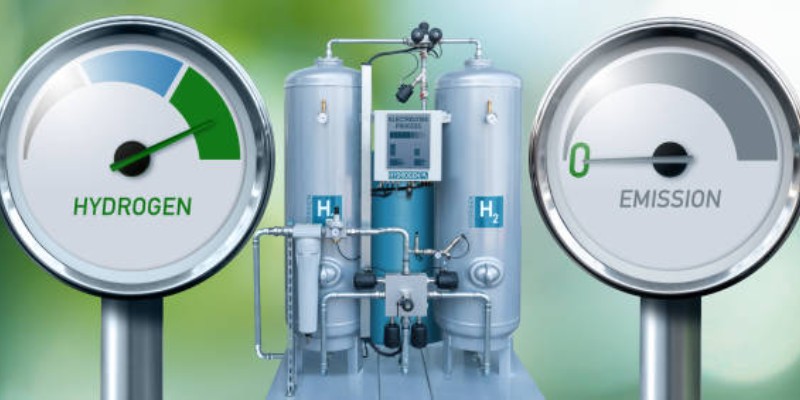
3. Electrolyser costs are falling as manufacturing grows.
Green hydrogen wouldn’t scale without electrolysers - the machines that turn electricity into hydrogen. Just a few years ago, these units were expensive and custom-built. Today, manufacturers are producing them in larger, more standard factories.
Global real‑world investment data shows the industry has reached more than $110 billion in committed capital across 500+ hydrogen projects worldwide, with the number rising steadily year after year. Growth like this brings manufacturing cost declines through experience and scale.
Government programs like the U.S. production tax credit - which can be up to $3 per kilogram of clean hydrogen - also make projects financially more attractive.
As production ramps up, unit costs for electrolysers fall, and the total cost of green hydrogen starts to compete more directly with hydrogen made from fossil fuels.
4. Public money is reducing early risk.
Governments aren’t just talking - they are writing checks.
In the U.S., the Bipartisan Infrastructure Law and the Inflation Reduction Act have put billions into regional hydrogen "hubs" and production incentives that support clean hydrogen projects. These policies help lower capital risk and give lenders confidence they’ll see returns.
In the European Union, nearly €1 billion has been approved for hydrogen projects through the Innovation Fund, with further auctions planned via the European Hydrogen Bank. These funds help producers get financing by locking in stable revenue for years.
Poland’s development bank recently agreed to provide nearly €500 million in subsidies for domestic hydrogen capacity, showing that support isn’t limited to just a few big countries.
This kind of public support draws private capital because investors see clearer cash‑flow projections and reduced uncertainty.
5. Long‑term buyers are committing to supply.
Projects only get financed when buyers commit to buy the output. Heavy industry players are beginning to sign multi-year contracts for hydrogen and hydrogen‑derived products like green ammonia and fuels.
For example, utilities like RWE and major energy companies such as TotalEnergies have signed deals to supply tens of thousands of tons of green hydrogen on long contracts stretching into the 2030s.
Long contracts give lenders confidence they’ll be paid back over time, making it far easier to close financing for large projects.

6. Energy security concerns favor domestic fuel production
Global energy politics have shifted sharply in recent years. Heavy reliance on imported fossil fuels exposes countries to price swings, supply disruptions, and geopolitical leverage over critical energy supply. In Europe, for example, imports of liquefied natural gas from a single trading partner made up nearly 60 percent of total LNG imports in 2025, underscoring the risk of concentrated supply chains.
Green hydrogen can be made domestically from renewable power and water. It doesn’t require fuel imports, which gives policymakers and planners a tool to reduce exposure to foreign energy risks. That strategic value attracts sovereign wealth funds, public pension capital, and large utilities that have long time horizons and low tolerance for supply shocks.
Countries with strong wind or solar resources see opportunities not just for domestic use but also for exports of hydrogen molecules or hydrogen‑derived fuels like ammonia.
At major industry forums in 2025, government representatives and company leaders reaffirmed commitments to build international supply chains for hydrogen and its derivatives, indicating that hydrogen is becoming part of long‑term trade strategies, not just national decarbonization plans.
7. Infrastructure reuse lowers transition costs
One of the reasons hydrogen attracts money is that it doesn’t always require all‑new infrastructure. Parts of the existing gas network can be adapted to carry hydrogen or hydrogen blends, which can significantly reduce up‑front capital needs compared with building entirely new systems. Retrofitting pipelines may involve upgrading seals, compressors, and monitoring systems, but those costs are often far lower than laying new transmission lines from scratch.
In practice, blending small amounts of hydrogen into natural gas pipelines can be done with modest changes. But higher concentrations often require more substantial work and safety upgrades. Operators that understand these nuances can plan phased investments that stretch budget dollars further and shorten payback timelines.
For investors and project planners, this means early focus should be on assessing which parts of a regional gas network can be repurposed most cost‑effectively, where safety enhancements are needed, and how to phase conversions so that assets are reused rather than replaced.
8. Corporate climate targets require credible pathways
Public and private companies face increasing scrutiny from customers, financiers, and regulators about their carbon footprints. Net‑zero pledges carry little weight unless backed by substantive action plans. That is why many large corporations are turning to green hydrogen as part of their decarbonization strategies, especially where direct electrification isn’t feasible.
When a corporation’s own investment arm co‑funds a hydrogen project, it sends an important signal to the broader market that climate commitments align with financial strategy.
Banks and lenders respond to that alignment because it reduces risk. Corporate buyers, in turn, benefit from a predictable fuel supply and a documented reduction in emissions that can be reported to stakeholders.
This linkage between corporate climate priorities and project finance has helped turn green hydrogen from a niche idea into a line item in many companies’ decarbonization budgets.
9. Project sizes are finally big enough for institutional capital
Early hydrogen ventures were often small, experimental, and hard to finance. Today, many projects are measured in hundreds of megawatts and involve billions of dollars in total investment. That kind of scale is necessary for pension funds, insurance capital, and infrastructure investors, which look for predictable, low‑risk returns over decades.
Large projects spread fixed costs more widely, often secure better terms from lenders, and can deliver hydrogen at prices closer to industrial buyers’ expectations. As a result, capital that once sat on the sidelines is now being deployed because the ticket size and contractual structure match institutional requirements.
For developers, this means thinking in terms of hubs - clusters of production, storage, and offtake - rather than isolated plants. Investors prefer platforms that anchor multiple revenue streams rather than a single buyer dependent on commodity prices.
10. Hydrogen links multiple markets into one growth story
Green hydrogen is more than a fuel. It connects power generation, industrial heat, chemical feedstocks, freight transport, and export markets. Investors often value opportunities that bridge multiple sectors because they diversify risk.
A single hydrogen hub can serve an industrial park with heat and feedstock, supply seasonal grid balancing services, fuel a trucking fleet, and provide export volumes via ammonia terminals. This flexibility means if demand in one sector softens, other markets can absorb production. That optionality is especially attractive when economic conditions change, or when regulatory shifts affect one end use but not others.
For strategic planners, this means assessing demand not just locally but across a range of consumption pathways and export corridors, then structuring supply agreements that span those markets.

11. Clear benchmarks make performance easy to track
Investors want transparency. Over the past few years, hydrogen project developers have started reporting standardized performance metrics, including cost per kilogram, electrolyzer efficiency, capacity factor, and lifecycle emissions intensity. Clear benchmarks reduce uncertainty and make it easier to compare projects across geographies and technology choices.
When performance can be measured quarter by quarter, investors feel more confident backing long‑term financing. This transparency also helps regulators and corporate buyers evaluate progress toward climate goals and adjust contracts or incentives to reflect real performance.
12. The cost gap is narrowing faster than expected
One of the biggest barriers to green hydrogen has been cost. In 2025, production costs for green hydrogen commonly range between roughly $3 and $8 per kilogram at the electrolyzer output, depending on region and renewable power costs.
Industry analysts find that production costs are expected to fall about 50 percent by 2030 as renewable electricity gets cheaper, electrolyzer technologies improve, and factories scale up. In some regions with very low‑cost solar and wind, production costs may drop below the current fossil hydrogen baseline sooner than many expected.
This trajectory changes the investment math. Developers and financiers who secure land, permits, offtake agreements, and grid interconnections early can be in position to benefit as costs decline. For buyers, locking in supply contracts now can hedge against future price volatility and support long‑term planning.
Share this article:
Recommended For You





Most Viewed



ADVERTISEMENT